



-
EPOXY PRODUCTS
-
Floor Coatings
- PRIMER WG 032
- WALL WG 034
- BRV SC 105
- BRV SC-200 K
- PRIMER SC 210
- PRIMER SC 215
- PRIMER SC 220
- SC Z-230 Self Leveling C Komponent
- PRIMER SC 270
- PRIMER SC 325
- DECOFLOOR SC 330
- FLOOR SC 470
- SC 600
- WALL SC 605
- WALL SC 605-C
- BRV SC 610 • Solvent-Free Epoxy Topcoat
- BRV SC 620 • Solvent-Free Textured Epoxy Topcoat
- BRV SC 625 SOLVENT-FREE EPOXY TOP COAT NON-SLIP FLOOR PAINT
- FLOOR SC 645
- SC 650 ST
- FLOOR SC 902
- FLOOR SC 903
- BRV SC 905 • CHEMICAL RESISTANT SOLVENT-FREE EPOXY TOP COAT FOR VERTICAL SURFACES
- FLOOR SC 950
- FLOOR SC 1200
- FLOOR AC 6380
- ROAD AC 6388
- Waterproofing Products
- Repair Anchorage and Assembly Products
- Joint Filler and Ceramic Adhesive Products
- Wood Protection Adhesive and Lamination Products
- Natural Stone Protectors
- Water Reservoir & Drainpipe Insulation Products
- Anticorrosive Products For Metal Surfaces
- Thinners
-
Floor Coatings
-
POLYURETHANE PRODUCTS
- FLOOR COVERING AND PAINTING PRODUCTS
- WATERPROOFING PRODUCTS
- STRUCTURAL REINFORCEMENT REPAIR ANCHOR INSTALLATION PRODUCTS
- WOOD PROTECTOR, ADHESIVE AND LAMINATION PRODUCTS
- NATURAL STONE PROTECTIVE PRODUCTS
- ANTICORROSIVE PRODUCTS FOR METAL SURFACES
- CONCRETE SURFACE PROTECTION AND POLISHING PRODUCTS
- THINNERS
-
ACRYLIC PRODUCTS
- WATERPROOFING PRODUCTS
- FLOORING AND PAINTING PRODUCTS
- INTERIOR AND EXTERIOR INSULATION & PAINT PRODUCTS
- SPECIAL FLAME RETARDANT INSULATION PRODUCTS

BRV SC 905 • CHEMICAL RESISTANT SOLVENT-FREE EPOXY TOP COAT FOR VERTICAL SURFACES
DEFINITION
USAGE AREAS
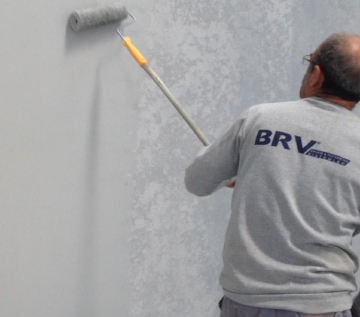
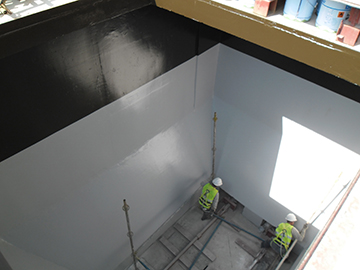
It is used as top layer epoxy paint on vertical surfaces of ceramic walls, laboratories, hospitals food facilities, swimming pools and water tanks, toilets, industrial facilities that are subjected to chemical matters.
Type | TS EN 1504-2 / Nisan 2008 Principle 5 (PR): 5,1 Physical Resistance / Surface Improvement Coating Application ( C ) |
Color | RAL colors |
Appearance | Bright |
Solid Matter By Weight, % | 95 |
Density | 1,55 g/cm³ |
Waste | 0,200-0,500 kg / m2 |
Package | 20 kg A Component + 4 kg B Component: Total 24 kg |
Flash Point | >25 °C |
Mixture Ratio | 5 / 1 |
Application Methods | Brush, Roller, Airless Gun, Trowel |
Mixture Life | 30 minutes / 25°C |
Shelf Life | 1 year |
Waiting Time Between Coating | 12 hours/ 25°C |
Drying Time | 12 hours / 25°C |
Mechanical Strength | 7 days |
Shore D Hardness Fire Reaction Class | 70 (7 days / 25°C C |
Equipment Cleaning | Epoxy Thinner |
SURFACE PREPARATION
The surfaces to be applied should be clear of grease, dust and dirt. Free particles on surfaces, cement slurry on cement surfaces and parts that prevent gluing should be cleared.
MIXTURE PREPARATION
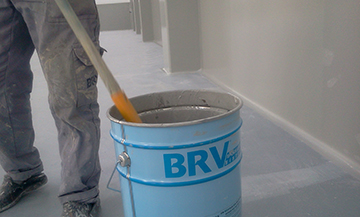
The concrete surface where application would be done should be primed using SC 210 multi-purpose Epoxy Primer, SC 215 Epoxy Primer without Solvent or SC 270 Low Viscosity Epoxy Impregnated Primer. On moist surfaces SC 220 should be used and on 100% moist surfaces Epoxy Primer. 12 hours after the priming process, epoxy painting process can start. In brush or roller applications, epoxy brush or roller should be used. If it is necessary, the product itself can also be used as the first layer primer.
APPLICATION CONDITIONS
* The surfaces must have sufficient endurance. Concrete should endure minimum 25 N/mm² pressure and endure against minimum 1,5-2 N/mm² pull-off strength
* The surface should be clean, straight, dry and should not exceed 5% moisture and if moisture is above this rate, SC 220 should be used on moist surfaces and Epoxy Primer on 100% moist surfaces
* The priming should have completed its curing prior to moving on to the top layer epoxy painting process
* Application should be avoided under 10°C and in high moisture environments.
* The mixture ratios should be paid attention to.
STURDINESS TABLE AGAINST
CHEMICALS / ACIDS – CORROSIVE WATER – ORGANIC SALTS
ENIRONMENT | CONCENTRATION | STORAGE TEMPERATURE | STURDINESS PERIOD AND EVALUATION 7 DAYS 1 MONTH 6 MONTHS 12 MONTHS | ||||||||||||
ACETIC ACID | % 2 | 90°C | X | X | X | XX | |||||||||
LACTIC ACID | % 10 | 20°C | X | XX | XX | XX | |||||||||
CITRIC ACID | % 10 | 20°C | X | X | X | XX | |||||||||
AMMONIA | % 25 | 20°C | XX | XX | XX | XX | |||||||||
HYDROGEN PEROXIDE | % 1 | 90°C | X | XX | XX | XX | |||||||||
SODIUM HYPOCHLORITE | %12-%16 | 90ºC | X | X | X | XX | |||||||||
IRON SULFATE | % 20 | 20°C | XX | XX | XX | XX | |||||||||
ALCOHOL | % 98 | 20°C | X | X | X | X | |||||||||
FORMALDEHYDE | % 20 | 20°C | X | X | XX | XX | |||||||||
CAUSTIC | % 2 | 90°C | X | X | X | X | |||||||||
PHENOL | 20°C | X | X | X | XX | ||||||||||
PHOSPHORIC ACID | % 10 | 20°C | X | X | X | X | |||||||||
SODIUM SULFATE | % 8 | 90°C | X | X | X | X | |||||||||
FORMIC ACID | % 5 | 20°C | X | X | X | X | |||||||||
SALTY WATER | % 8 | 90°C | X | X | X | X | |||||||||
X : No Damage XX: Color fading | xxx : Quite harmful xxxx : Excessive damage exists | ||||||||||||||
| |||||||||||||||